This informative article sees Freefoam Building Products Ltd took about the latest colour trends in roofline, rainwater, and cladding…
While designs and colours in roofline, rainwater and cladding were limited for many years, the expansion in choice in recent years means new options are increasingly being specified to add visual interest and value. Different colours are selected to work with other building elements – not just guttering, but windows, front doors, and even bi-fold and garage doors. The wrong shade or design can stick out like a sore thumb and ruin the overall look.
In the domestic home improvement market, while the price premium might put off the ‘Have Nots’, homeowners with money to spend are more likely to choose colour, because they can, but also because they want to match products they’ve already invested in, eg roofline and cladding that complements windows and doors.
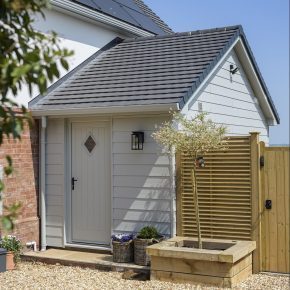
Meanwhile, in new build, although white roofline is still the default, black, brown, sable, and pale gold are also available – and greys in particular have become popular following the ongoing trend in interior design (we offer three grey shades, for example – Storm Grey (RAL No. 7045), Dark Grey (RAL No. 7015) Anthracite Grey (RAL No. 7016).
Aidan Harte, CEO of Freefoam, comments: “In PVC cladding and roofline, demand has driven an expansion in the choice of design – but especially colour – as the markets have grown. Some of our cladding ranges now have 11 choices, with accessories to match. But colour choices are changing.”
Shades of Grey
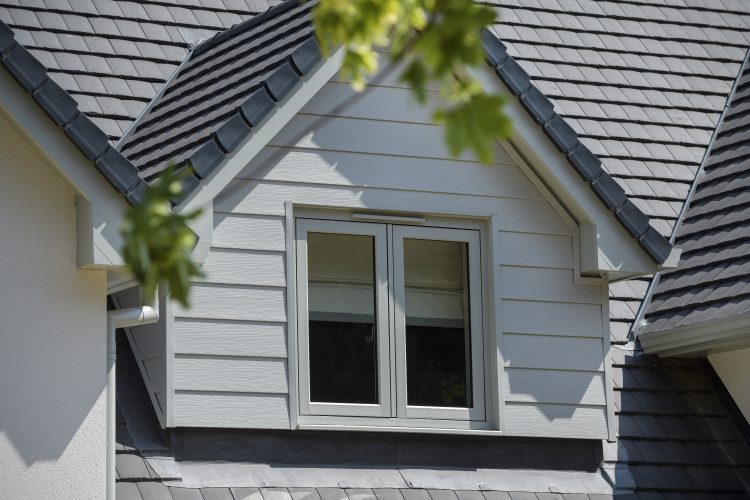
Aidan continues: “Greys in cladding particularly are really popular in the UK, as well as the continental market (we offer four greys in our Fortex® textured cladding range, for example) and have been for the past few years. There’s a lot of opportunities in cladding as it’s still growing strongly; the choice of colours can really help.
“Anthracite Grey, which we launched a couple of years ago, remains very popular. Sales of this hue in our Fortex® range (including Fortex® Double Shiplap, Weatherboard, and the recently launched Shadow Gap) grew most strongly last year, up nearly 12% in 2024 compared to 2023, although lighter shades of grey such as Slate Grey and Storm Grey dropped slightly, as did grey-greens including Misty Grey and Sage Green.”
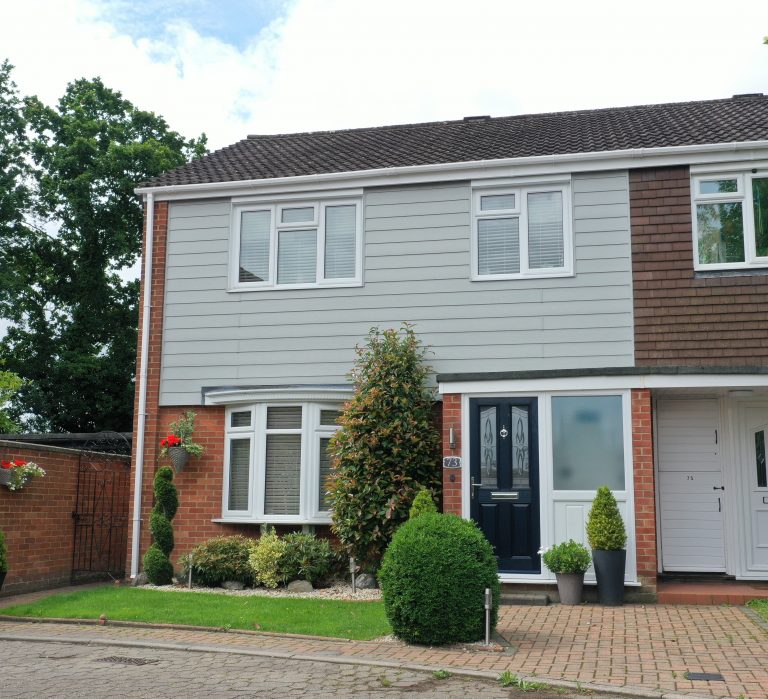
Richard Jackson, Freefoam’s UK Sales Director, explains: “Latest (2024) analysis of colour trends, from a leading foil provider for the UK and Ireland, shows that Anthracite Grey foils make up 37% of foil sales, overwhelmingly the preferred shade, followed by Black at 22% and then Rosewood at 13%. White and Agate Grey make up 4% each, while Golden Oak, Cream, and Slate Grey make up 3% respectively.”
Colour choices warm up
Interior design trends have shown a preference for warmer neutral shades over the past couple of years. Two of the main colour trends for 2025 predicted by Homes & Gardens and Good Housekeeping magazines were dark, earthy colours (eg chocolate or charcoal/dark grey), and warm neutrals, while Pantone’s colour of the year is Mocha Mousse.
But as paint and furnishings are easier to change there’s a natural colour lag in home improvements. Richard comments: “We will definitely be reviewing sales of Pale Gold, Sand, Cappuccino and Argyl Brown at the end of 2025 to see if this interior trend has transferred to the exterior sector.”
Roofline – the perfect foil
Aidan adds: “Although the roofline market has expanded, sales of white roofline products have declined almost year-on-year since 2016 to 2024, by just over 11% overall, while Woodgrain products are up nearly 10% in the same period, and our Colourmax® products (using patented technology for colour variety and fastness) have also increased. Black and Brown roofline has remained steady. One in five of Freefoam’s roofline sales are now foil or colour.”
Some options can also be RAL-matched to other building elements, and ideally come with complementary accessories for a perfect finish.
Further foiled colours are also now available on the market, including matt black and matt grey, which can be used to complement high-end aluminium (or aluminium-look) bi-folds and windows, while white woodgrain is being specified more often for a softer, more traditional look. This can work better in conservation areas or locations in the countryside.
The devil’s in the detail
Colour roofline is one of the details that can be particularly useful for SME and regional developers to differentiate residential estates and offer a higher-end, more custom build. This approach can give a development its own identity but also help it work with the surrounding architecture, whether the project is a brownfield/infill urban or suburban site in between existing properties, or set in a more rural location that requires architects and specifiers to reflect the look of traditional materials used in the area.
Independent housebuilder Morris Homes chose dark grey fascia in its Glebelands development in Leicestershire (pictured) to complement windows, Juliet balconies, and garage doors all in grey for a coordinated, contemporary look.
Phil Shaw, Procurement Manager, explains: “Glebelands Park is one of our more ‘contemporary’ sites. We’re often driven by planning guidelines and pride ourselves on being able to offer Local Authorities a ‘non-standard’ look that will enhance the local area. One of the ways we achieve this is by using colour instead of white. It immediately raises the profile of a house design and gives instant kerb appeal.”
One of the key things for contractors to look out for is long-lasting guarantees (eg 10-years) against discolouration, blistering, etc, and stockists that have colour products ‘on the shelf’ that they can provide with no lead time. This means the supplier holds the stock so contractors can call off what they need, when they need it, without having to store anything on site – which can result in damage or wastage.
See the full range of products and colours at www.freefoam.com or call 0800 002 9903 to find out how Freefoam can help you win more sales with colour.